
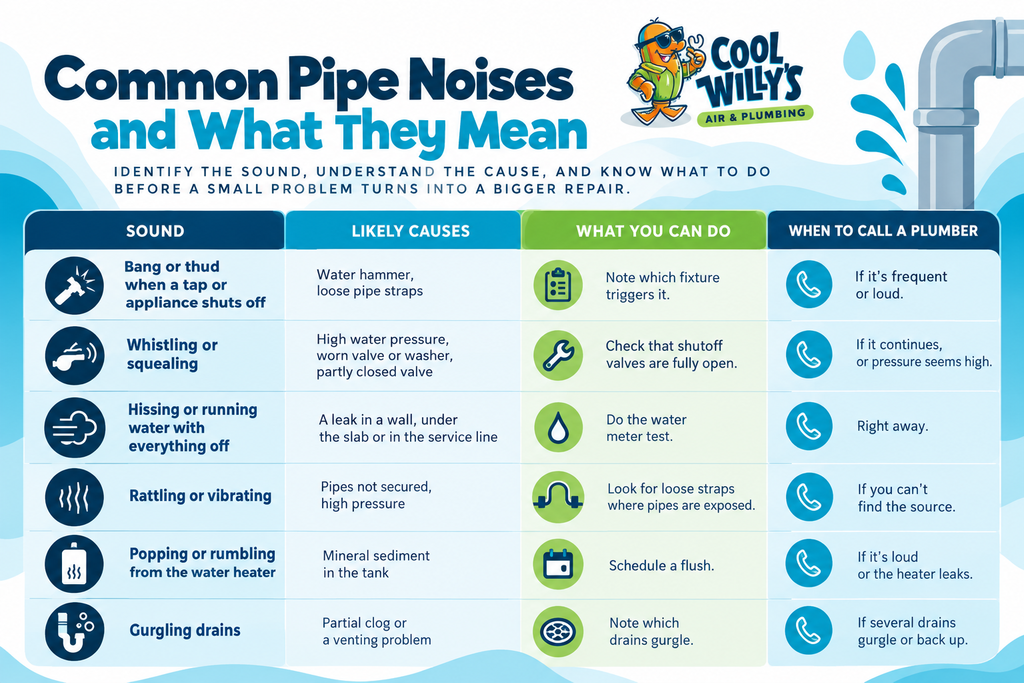
Pipe noises are usually your plumbing’s early warning system. Banging often points to water hammer or loose pipes, whistling to high pressure or a worn valve, and hissing or running water with every tap off to a leak. Catching these sounds early, along with signs like stains or warm floor spots, gives you time to fix a small problem before a pipe fails.
Why Are My Pipes Making Noise?
Most pipe noise comes from water changing speed, pressure or direction, or from pipes moving inside walls and floors. Some noises are harmless. Others are the first sign of stress that can wear out fittings, joints and valves over time.
The table below matches common sounds to likely causes. Several causes can produce similar sounds, so treat it as a starting point, not a diagnosis.
What Is Water Hammer, and Is It Dangerous?
Water hammer is the bang you hear when fast-moving water is stopped suddenly, usually by a quick-closing valve. Dishwashers, washing machines, ice makers and single-handle faucets are common triggers because their valves snap shut.
The pressure spike from each bang is brief, but repeated over months and years it can loosen fittings, stress joints and shake pipes against framing. It’s not usually an emergency, but it’s worth fixing. A plumber can secure loose pipes, check your water pressure and install water hammer arrestors, small shock absorbers that fit near the fixture causing the problem.
Why Do My Pipes Whistle?
Whistling usually means water is squeezing through a restriction. Common reasons:
- A shutoff valve under a sink or toilet that’s only partly open
- A worn washer or cartridge in a faucet or toilet fill valve
- Mineral scale narrowing a valve or fitting
- Water pressure that’s higher than it should be
Tucson Water describes its water as hard to very hard[6], and that mineral content builds up as scale inside valves and fixtures over time. If whistling comes from one fixture, the problem is likely at that fixture. If it’s throughout the house, pressure is the more likely culprit.
Is High Water Pressure Bad for Pipes?
Yes. Consistently high pressure strains every pipe, fitting, valve and appliance connection in the house. Plumbing codes commonly call for a pressure-reducing valve when static pressure exceeds 80 psi. A plumber can test your pressure with a gauge and adjust or replace the pressure-reducing valve if your home has one. These valves wear out, and when one fails, pressure can creep up without you noticing.
Signs your pressure may be too high:
- Banging or whistling throughout the house
- Faucets and showerheads that spray hard or drip
- A toilet fill valve that won’t stop running
- A water heater relief valve that drips
What Does a Slab Leak Sound Like?
A slab leak often sounds like water running when every fixture in the house is off. Many homes in the Tucson area are built on concrete slabs, and some water lines run beneath the floor. When one of those lines leaks, the sound may be faint, and you may notice other signs first:
- A warm spot on the floor, which can point to a leaking hot-water line
- Damp or stained flooring, or baseboards that swell
- A water bill that climbs with no change in use
- Lower water pressure
- A water meter leak indicator that moves with all water off
A leak under the slab is not a do-it-yourself repair. Finding it takes specialized equipment, and the fix may mean rerouting the line rather than breaking into the floor.
What Visual Signs Should You Watch For?
Sounds are only half the story. These signs often show up before a pipe fails:
- Water stains on ceilings, walls or under sinks
- Green or white crust on fittings, a sign of a slow leak or corrosion
- Rust-colored water, which can point to corroding galvanized pipe or a water heater problem
- Bulging, soft or peeling drywall or paint
- Musty odors inside cabinets or closets
If your home has older galvanized steel pipes, or you’re seeing repeated leaks in different spots, the piping may be near the end of its life. At that point whole-home repiping can make more sense than patching one leak after another.
Can Pipes Freeze in Tucson?
They can, though it’s uncommon. Tucson averages about 12 nights a year at or below freezing.[4] The pipes most at risk are exposed ones: hose bibs, irrigation backflow preventers, outdoor water heater lines and pipes in unheated garages. On forecast freeze nights, disconnect hoses and wrap exposed lines and backflow devices.
What Should You Do If a Pipe Bursts?
Shut off the water at the main valve first, then call a plumber. Every adult in the house should know where the main shutoff is before an emergency; here’s how to find your main water shutoff valve. If water is near electrical outlets, fixtures or the panel, keep clear and shut off power to that area only if you can do so safely. Cool Willy’s provides burst pipe repair and can help limit damage.
How Can You Prevent a Pipe From Breaking?
Most pipe failures build up over time, which gives you room to prevent them. Keep water pressure in a safe range, secure loose pipes, deal with scale, and fix small leaks when they appear. A yearly plumbing maintenance visit is a good way to catch these early: a plumber checks pressure, shutoffs, supply lines and the water heater, and tells you what can wait and what shouldn’t. For anything already leaking, our plumbing repairs team can help.
Frequently Asked Questions
Why do my pipes bang when I turn off the water?
That’s most likely water hammer, a pressure spike when a valve closes quickly. Loose pipe straps can make it louder. A plumber can secure the pipes, check pressure and add water hammer arrestors.
Why do my pipes make noise at night when no water is running?
Noise with no water in use can mean a leak, a toilet refilling from a slow leak, or an appliance cycling, like an ice maker or water softener. Check the water meter’s leak indicator with everything off to rule out a leak.
Can hard water damage my pipes?
Hard water leaves mineral scale in valves, fixtures and water heaters, which can cause whistling, reduce flow and wear out parts sooner. Water treatment can reduce scale throughout the home.
Are banging pipes an emergency?
Usually not, but they shouldn’t be ignored. Repeated water hammer stresses joints and fittings over time. If banging comes with leaks or very high pressure, call a plumber soon.
How do I know if I need to repipe my house?
Frequent leaks in different places, rust-colored water, low pressure throughout the home and aging galvanized pipes are all signs to have a plumber evaluate your piping. Repiping is usually worth considering when repairs start stacking up.
Have a Plumber Listen In
If your pipes are banging, whistling or making sounds you can’t explain, a Cool Willy’s plumber can track down the cause and explain your options before anything gets worse. Contact Cool Willy’s Air & Plumbing to schedule a visit.