
A plumbing problem becomes an emergency when it creates an immediate risk of water damage, sanitation problems, loss of an essential household service, or a safety hazard. In those situations, the priority is to make the area safe, stop water when you can do so safely, and call for emergency plumbing help.
Not every clogged drain or dripping faucet needs an after-hours visit. These seven situations deserve more urgent attention.
What Counts as a Plumbing Emergency?
A useful question is: What happens if I leave this problem alone until tomorrow?
If the likely answer is continued flooding, sewage exposure, major property damage, or a serious safety concern, it should not be treated like a routine repair.
Cool Willy’s provides emergency plumbing service in Tucson and surrounding Southern Arizona communities and identifies burst pipes, severe leaks, sewage-related backups, loss of water, and certain water-heater problems among the situations that may require urgent service.
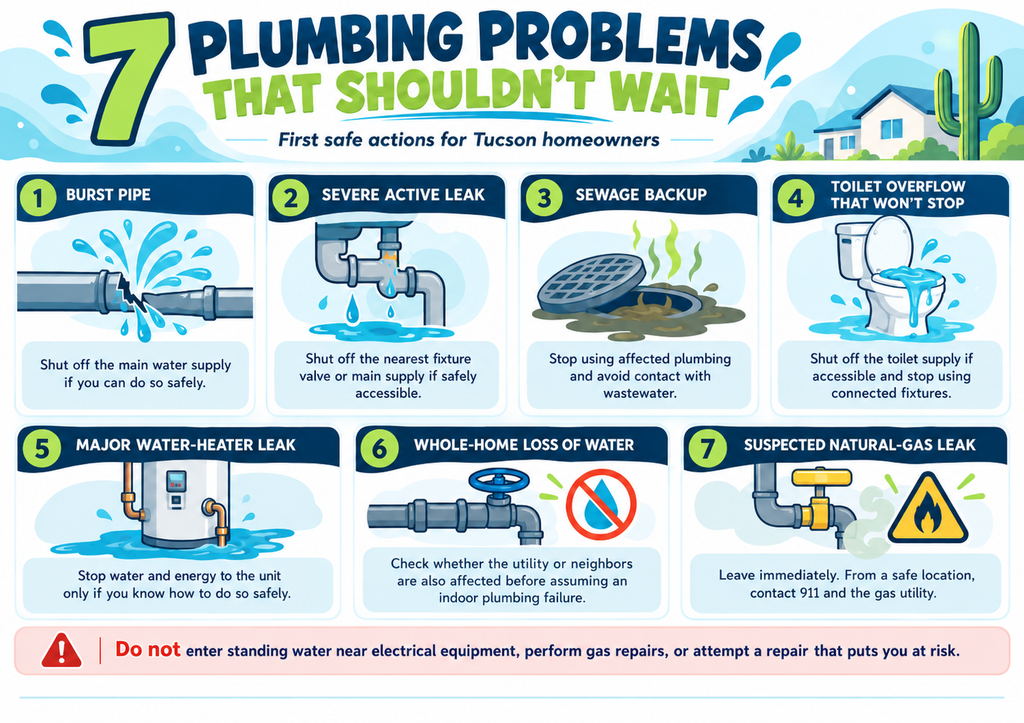
1. A Burst Pipe or Broken Water Line
A burst pipe can release water continuously until the supply is shut off.
If you can safely reach the main water shutoff, turn off the water and then open a fixture at a lower point in the home to relieve remaining pressure if appropriate for your plumbing system.
Keep people away from water that has reached electrical outlets, appliances, panels, or wiring.
Do not wade into standing water to reach a shutoff or electrical control.
After the immediate flow is stopped, professional repair is still necessary. The plumber needs to determine what failed and whether surrounding piping was also affected.
2. A Severe Leak That Is Actively Damaging the Home
Not every leak is an emergency, but a leak that is soaking cabinets, ceilings, floors, drywall, or other materials can become expensive quickly.
If the leak is connected to a single fixture and its shutoff valve operates normally, isolating that fixture may stop the flow.
If you cannot identify or isolate the source safely, use the main water shutoff.
Then call an emergency plumber rather than relying on buckets and towels as a long-term solution.
3. Sewage Backing Up Into the House
Wastewater entering a tub, shower, floor drain, or other fixture requires prompt attention.
Stop using the plumbing fixtures that may be feeding the backup. Continued flushing, showering, dishwashing, or laundry can add more water to a blocked drainage system.
Avoid direct contact with sewage and keep children and pets away from affected areas.
A plumber may need to determine whether the problem is a local fixture blockage, a main sewer obstruction, root intrusion, pipe damage, or another drainage issue.
Cool Willy’s offers drain cleaning, sewer-line inspections, and sewer repair when those services are appropriate to the problem found.
4. A Toilet That Is Overflowing and Will Not Stop
A routine toilet clog is not always an emergency.
An actively overflowing toilet is different—especially when you cannot stop the water, wastewater is spreading beyond the bathroom, or other fixtures are backing up too.
If the toilet shutoff valve is accessible and turns normally, shut off its water supply. Do not continue flushing to “see if it clears.”
If several drains or toilets are affected at the same time, the problem may extend deeper into the drainage system.
That is more important to evaluate promptly than a single slow toilet.
5. A Water Heater That Is Leaking Heavily
A few drops around a connection and water actively escaping from the water-heater tank are not the same situation.
A major water heater leak can continue damaging nearby materials as long as water enters the unit.
Water heaters also involve electricity or gas, hot water, and pressure. If you know the correct shutoff procedure for your specific unit and can reach the controls safely, stop the water and energy source.
If you are uncertain, keep clear of the equipment and call for professional guidance rather than experimenting.
A leaking tank is not something to patch or ignore. The plumber needs to identify whether the source is a connection, valve, component, or the tank itself.
6. Your Entire Home Suddenly Has No Water
Loss of water throughout the house can indicate a plumbing problem, but check whether the interruption is coming from the utility first.
Look for an outage notice or find out whether nearby homes are also affected.
If the utility is operating normally and your home alone has lost water, the problem may involve the main supply, a shutoff valve, pressure equipment, or a damaged water line.
Visible water outside, unexplained soggy areas, or rapidly changing meter activity can provide useful information to the plumber.
7. You Smell Natural Gas Around a Gas Water Heater or Appliance
Treat a suspected gas leak as a safety emergency—not as a plumbing troubleshooting project.
Southwest Gas advises anyone who detects the sulfur-like or rotten-egg odor associated with natural gas to leave the area immediately. From a safe location, call 911 and Southwest Gas at 877-860-6020.
Do not operate switches, thermostats, appliances, garage doors, or anything that could create an ignition source while you are leaving.
A plumber can address applicable equipment issues after the area has been made safe and the gas emergency has been handled by the appropriate utility and emergency personnel.
Which Plumbing Problems Can Usually Wait for a Regular Appointment?
Problems that are contained and not causing active damage can often be scheduled normally.
Examples may include:
- A slow but still-functioning single drain
- A faucet that drips only from the spout
- A running toilet that can be isolated with its fixture shutoff
- Minor fixture problems with no active flooding
- A plumbing concern that has remained stable and poses no sanitation or safety risk
That does not mean you should ignore them indefinitely. It means they usually do not require the same response as a burst pipe or sewage backup.
When in doubt, describe what is happening when you call. The service provider can help determine the appropriate scheduling level.
What Should You Know Before a Plumbing Emergency Happens?
A little preparation makes an emergency easier to manage.
Homeowners should know:
- Where the main water shutoff is located.
- Which direction closes it.
- Where fixture shutoff valves are located.
- Who to call for emergency plumbing service.
- Where the water heater’s normal controls are located.
- That gas odors require evacuation and utility/emergency response.
- That standing water and electricity are a dangerous combination.
Do not wait for water to be pouring through the ceiling to locate the main shutoff for the first time.
FAQs
Is every clogged drain a plumbing emergency?
No. A slow or localized clog can often wait for a normal appointment. A complete blockage, sewage backup, or drainage problem causing active overflow deserves more urgent attention.
Should I shut off the main water for every plumbing leak?
Not necessarily. If the leak can be safely stopped using a fixture-specific valve, you may not need to shut off water to the entire house. Use the main shutoff when the source cannot otherwise be isolated safely.
Can I use a chemical drain cleaner during an emergency clog?
It is better to avoid adding harsh chemicals when a plumber may need to work on the line. Cool Willy’s does not recommend chemical drain cleaners as a routine solution.
Is a leaking water heater always an emergency?
A small contained drip and an actively leaking tank carry different levels of urgency. Significant water loss, electrical concerns, gas odor, or rapidly spreading water should be addressed promptly.
Who should I call first if I smell gas?
Leave the area first. From a safe location, call 911 and Southwest Gas at 877-860-6020. Do not remain inside trying to locate or repair the leak.
6. CTA
Get Help When a Plumbing Problem Cannot Wait
If you have an urgent plumbing problem in Tucson or a nearby Southern Arizona community, call Cool Willy’s Air & Plumbing at 520-595-4132. Describe what is happening so the team can help determine the appropriate next step and arrange emergency plumbing service when needed.